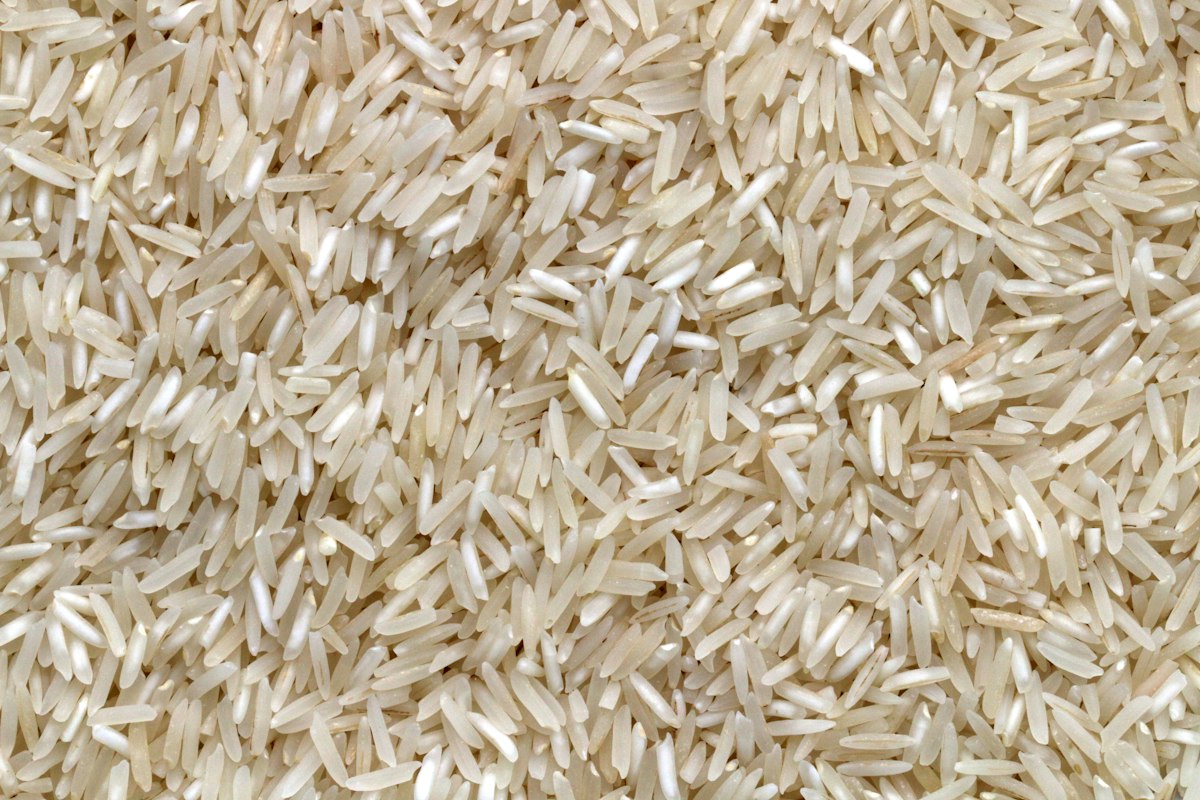
India Is Back — The 2026 Parboiled Rice Opportunity
India is back. After a two-year window (September 2022 to October 2024) of progressively tightening rice export restrictions — culminating in the September 2023 ban on non-basmati white rice and a 20% export duty on parboiled rice — the Indian government fully removed export duties on parboiled rice in October 2024 and eliminated the minimum export price (MEP) on non-basmati rice. The result: India has reclaimed its position as the world's largest rice exporter, shipping ~22 million MT of rice in FY 2024-25, with non-basmati parboiled at the centre of this rebound.
For West African importers — particularly in Nigeria, Côte d'Ivoire, Senegal, Ghana, and Benin — this is the most favourable Indian rice sourcing window in three years. Indian parboiled is now landing into West African ports at ~$20/MT below Thai parboiled on FOB basis, with no duty drag and full export access through 2026. This guide gives commodity traders, import agents, and government procurement teams the grade structure, current FOB benchmarks, and policy context they need to source confidently.
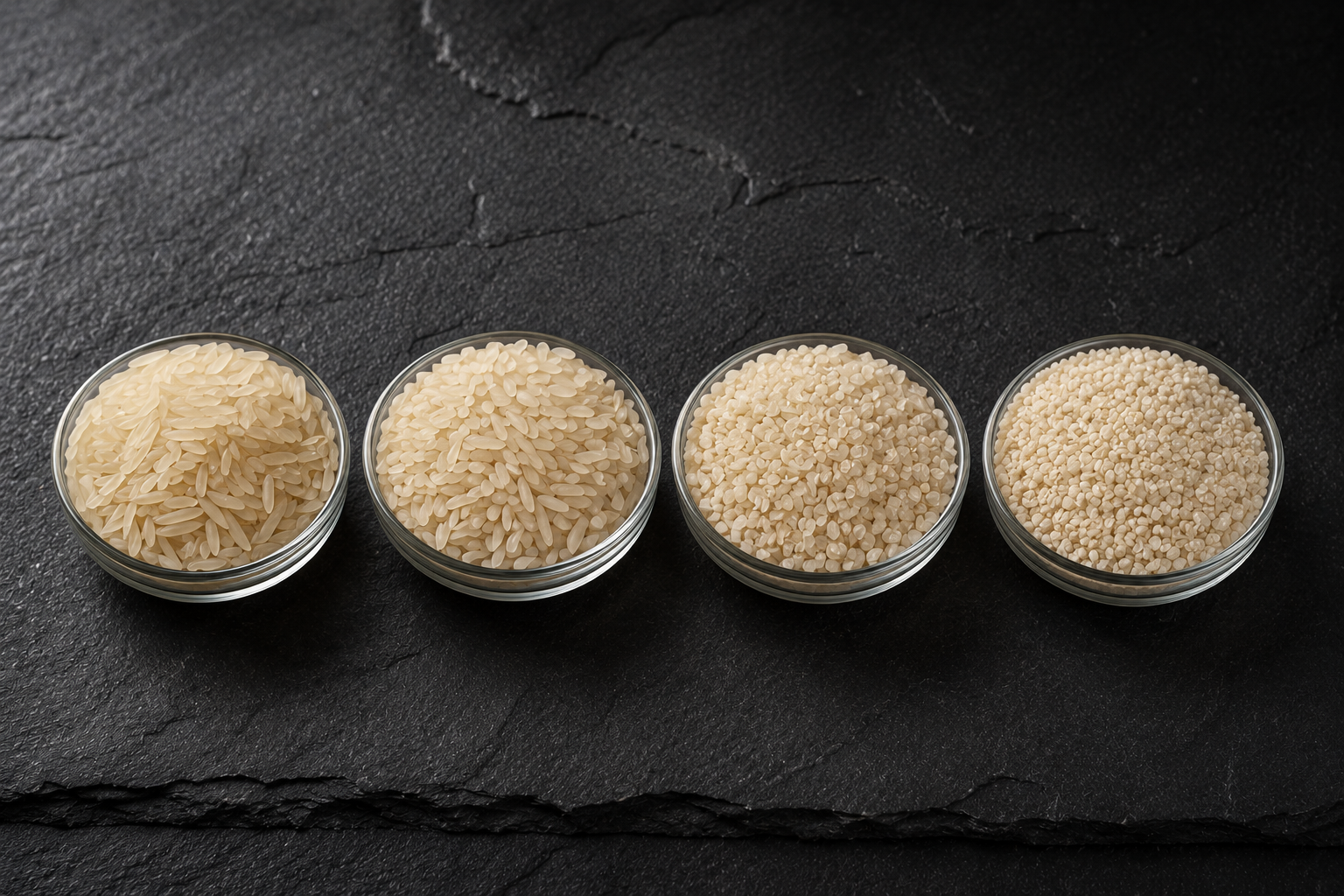
India's Non-Basmati Parboiled Rice Trade — The 2026 Reality
The structural foundation of India's role in West African food security has not changed — but the policy environment has, materially and favourably.
Policy timeline: The Indian government imposed a 20% export duty on non-basmati white rice in September 2022 and banned broken rice exports. Between July–September 2023 restrictions tightened further — an outright ban on non-basmati white rice exports, 20% duty on parboiled rice, and a minimum export price on basmati. In September 2024 the white rice ban was lifted with a $490/MT MEP and the parboiled duty dropped to 10%. In October 2024, all MEPs and the parboiled export duty were fully removed. Only the broken rice export ban remains in nominal form, with allowances in place for sub-Saharan African buyers.
Nigeria is India's single largest rice buyer — approximately 71% of Nigeria's rice imports by value in 2024 came from India, far ahead of Thailand (22%) and Brazil (3.4%). Nigeria consumes approximately 7–8 million MT of rice annually against domestic production of roughly 5 million MT (paddy basis), creating a structural import gap of 2–3 million MT per year. India supplies the overwhelming majority of that gap.
Why India dominates West African parboiled rice markets: Three structural reasons — consumer preference for parboiled rice's amber-golden colour and fluffy cooking profile (Jollof, Thieboudienne); Andhra Pradesh and Telangana's unmatched parboiling processing capacity at 50–100 tonnes per hour per mill; and the nutritional advantage of parboiling (B-vitamins driven from the bran into the endosperm, producing measurably more micronutrient-rich white rice than plain milled). These advantages are not easily disrupted by competing origins.
Grade Definitions, Key Varieties & FOB Price Benchmarks
IR 64 Parboiled — the dominant export variety. Medium-to-long grain (6.0–6.5 mm), reliable yield, consistent parboiling behaviour, high volume expansion on cooking. The benchmark for West African institutional and commodity trade. Sourced from Andhra Pradesh, Telangana, Odisha, and West Bengal.
Swarna Parboiled — medium grain, high-yield variety. Slightly shorter and stouter than IR 64. Preferred in some Francophone West African markets where a firmer texture is favoured. Strong production base in Odisha and West Bengal.
BPT (Samba Mahsuri / BPT 5204) Parboiled — short-medium grain premium sub-variety commanding a $20–$50/MT premium over IR 64 in select premium retail segments.
Indicative FOB prices — Kakinada / Visakhapatnam (mid-2026):
• IR 64 Parboiled, 5% broken: $340–$400/MT
• IR 64 Parboiled, 25% broken: $310–$360/MT
• Swarna Parboiled, 5% broken: $370–$420/MT
• BPT (Samba Mahsuri), 5% broken: $400–$460/MT
• Premium long-grain parboiled (sella format): $430–$500/MT
The Rice Exporters Association of India expects 5% broken parboiled prices to fluctuate within ~$10/MT around $390/MT through most of 2026. All FOB prices are indicative — request a current dated quotation before contracting.
Critical quality parameters for procurement spec: Moisture max 14%; broken % as per contract with right of rejection; head rice (≥¾ kernel) minimum 60% for 5% broken grade; chalky kernels max 5% for premium grades; damaged/discoloured grains max 2–3%; foreign matter max 0.1%; aflatoxin B1 max 2 µg/kg EU MRL (relevant for EU re-export). Primary HS code for milled/parboiled rice: 10063090. Broken rice: 10064000.
L/C at sight from a first-class bank is the standard payment instrument for Indian parboiled rice in West African markets. Always specify Kakinada or Visakhapatnam as load port — both have dedicated rice handling infrastructure that minimises loading delays. Most West African markets prefer 50 kg PP woven bags (Nigeria, Benin, Ghana) or 25 kg PP bags (Senegal, retail-oriented buyers). Always include a third-party pre-shipment inspection clause (SGS, Bureau Veritas, or Intertek) — any reputable Indian mill will accept this without resistance.
India vs Competing Origins — The 2026 Sourcing Landscape
The competitive landscape for West African parboiled rice is effectively a four-origin race: India, Thailand, Vietnam, and Pakistan.
India vs Thailand: Thai parboiled 100% sortex trades at ~$370–$410/MT FOB in early 2026 — approximately $20/MT above Indian IR 64 parboiled. On a 12,500 MT vessel load, that spread is $250,000. India's scale, established West African distribution relationships, and now-unrestricted export access make it the structural default for the region.
India vs Pakistan: Pakistani parboiled 5% broken is the lowest headline-price option at ~$300–$360/MT FOB, but documented variability in quality, parboiling consistency, and moisture control has triggered trade disputes in multiple West African port markets. The risk-adjusted cost often closes the apparent price gap.
India vs Vietnam: Vietnamese parboiled is competitively priced at ~$340–$400/MT FOB and gaining share but lacks India's scale and dedicated parboiling infrastructure for large-volume West African demand.
Growth market context: Sub-Saharan Africa's total rice imports grew 13.7% in 2025 to 22.3 million MT (per OSIRIZ / S&P Global Platts). Senegal imports ~1.9 million MT annually; Côte d'Ivoire ~2.5 million MT; Ghana ~1 million MT.
The variable to watch — Indian export policy. The 2022–2024 restriction episode demonstrated that India will periodically constrain rice exports during domestic supply concerns. Buyers who build 12-month forward supply relationships with annual volume commitments and quarterly delivery slots are far better insulated against policy volatility than spot-market buyers. The current full-access window is the right moment to build that contractual structure.
Source Indian Parboiled Rice Through Radiance Overseas
Radiance Overseas, headquartered in Indore (Madhya Pradesh), is an APEDA-registered Indian agro-export house operating since 2011 — shipping certified agricultural products to clients across the USA, EU, GCC, UK, ASEAN, Australia, and Africa.
What we offer West African parboiled rice buyers: Full variety range (IR 64, Swarna, BPT Parboiled to written specification); direct mill sourcing from vetted parboiling clusters in Andhra Pradesh, Telangana, Odisha, and West Bengal; loading from Kakinada or Visakhapatnam; 50 kg or 25 kg PP woven bags, jute bags on request; full documentation per shipment (Certificate of Origin, Phytosanitary Certificate, Fumigation Certificate, CoA, BL); third-party pre-shipment inspection accepted as standard; L/C at sight, CAD for established buyers, or advance + balance against documents; FCL containers or break-bulk vessel loads; MOQ one 20-foot container (~24 MT in 50 kg bags), break-bulk from 5,000 MT.
FAQ:
Is Indian parboiled rice export duty-free in 2026? Yes — all export duties on parboiled rice and all MEPs on non-basmati rice were removed in October 2024. Fully unrestricted as of May 2026.
Best variety for Nigeria? IR 64 Parboiled 5% broken for institutional/commodity trade. Swarna and BPT Parboiled for premium retail segments.
Best time to forward-contract? October–January, after the kharif harvest — locks in fresh-crop quality at competitive pricing.
Minimum order? One 20-foot container (~24 MT in 50 kg bags) for containerised shipments; 5,000 MT minimum for break-bulk vessel loads.
📞 India: +91-95849-49494 | +91-94068-00327 | 📞 USA: +1-469-544-9746 | ✉️ info@radianceoverseas.com