Assam Tea Private Label: What Buyers Need to Know
An Assam tea private label means a tea grown in India's Assam region, blended or packed under your own brand. Buyers choose CTC for strong, quick-brewing tea bags and orthodox leaf for premium loose tea. Orders ship by the full container, so the decisions below are made before the first purchase order.
Assam is a black tea region in the Brahmaputra valley, named for the Indian state. Its tea is made from Camellia sinensis var. assamica and is known for a malty, full-bodied, bright cup, which is why it anchors most breakfast blends. This guide covers grade choice, caffeine, seasons, EU compliance and the order process for importers and brand owners.
Is Assam tea good for a private label range?
Yes, if your customers want a strong, malty black tea that holds up with milk. Assam is a core ingredient of breakfast-style blends and a staple of tea-bag programmes, so it suits supermarket, café and online ranges that need a dependable everyday black tea.
Its strength is also a commercial advantage: a bold cup travels well across blends, and one Assam base can sit behind several SKUs, such as a pure Assam, an English-breakfast style blend and a masala chai base. Brands that want a lighter, floral profile usually add Darjeeling or Nilgiri alongside it. Radiance Overseas, established in 2011 in Indore, sources Assam, Darjeeling and Nilgiri tea, and you can read how our programme works on the private label tea manufacturers India page.
Is Assam an Indian tea, and where is it grown?
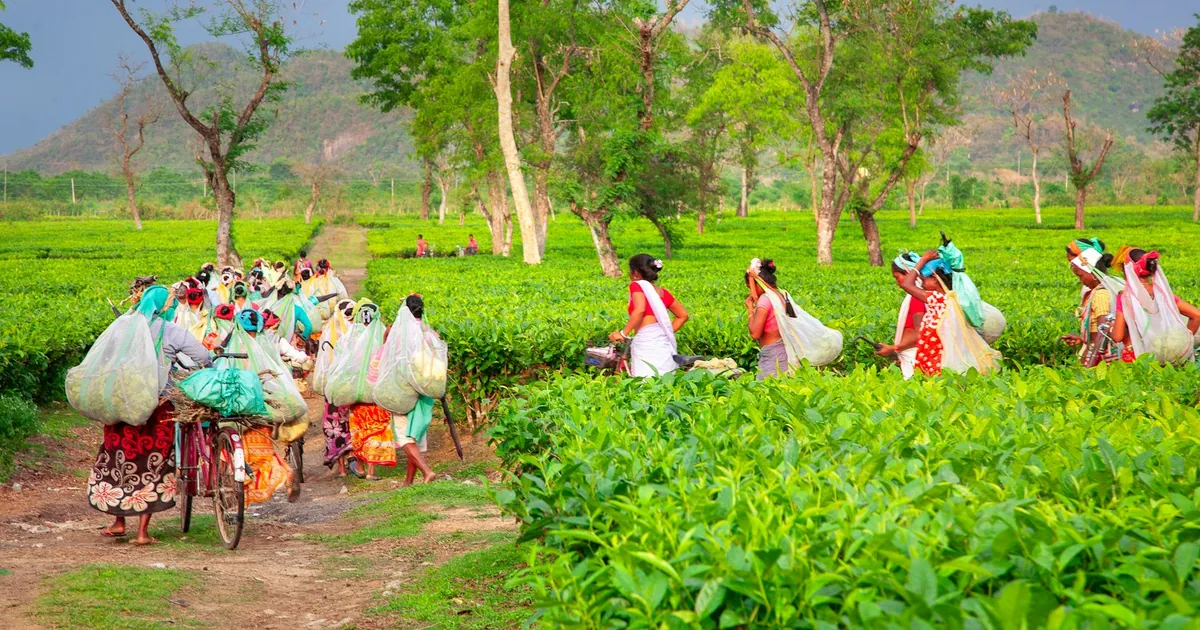
Yes. Assam is a state in north-east India, and Assam tea is grown in the Brahmaputra river valley. It is a lowland tea, unlike the hill-grown teas of Darjeeling and the Nilgiris, and it is processed mainly as black tea.
The valley's warm, humid, heavy-rain climate and alluvial soils are widely linked to the tea's malty character. The Tea Board of India, the statutory body under the Tea Act, 1953, supports the industry and licenses tea exporters; its site, teaboard.gov.in, is the primary source for official production and export statistics, which we recommend you check for the latest season rather than rely on quoted figures. For India-wide sourcing across regions, see our bulk tea supplier India page.
Should I choose CTC or orthodox Assam tea?
Choose CTC for tea bags and strong, fast-brewing blends, and orthodox for whole or broken leaf where appearance and a nuanced cup matter. CTC stands for crush, tear, curl; orthodox leaf is rolled more gently and keeps a larger leaf size.
Both are black teas and both are made in Assam. The practical differences for a private label buyer are:
- CTC: small, hard granules; deep colour and quick infusion; typical for tea bags, chai and the Gulf, CIS and South Asian markets.
- Orthodox: rolled leaf graded by size and tip content (for example OP, BOP, FOP and the tippy FTGFOP/TGFOP grades); suited to loose-leaf tins, premium pouches and specialty retail.
Does Indian Assam tea have caffeine?
Yes. Assam tea is a true tea from the Camellia sinensis plant, so it contains caffeine, and black tea is generally a moderate-caffeine drink. The exact amount depends on the leaf, grade and how the tea is brewed.
If you plan a low-caffeine claim or a caffeine figure on your pack, do not copy a number from a blog. Ask for a laboratory analysis of the actual lot and check the claim against the rules of your destination market. Where you sell decaffeinated or herbal products, those are different raw materials and should be listed as separate SKUs.
When is Assam tea harvested, and what does that mean for orders?
Assam tea is picked through the growing season, which starts with the first flush in spring, followed by the second flush, often called tippy tea for its golden leaf tips and valued for a sweeter, fuller cup. Plan your annual contract around these flushes.
A private label programme works best with a fixed base blend and a seasonal premium SKU. Tell us your launch month and we will advise which crop to book. Because shipments are full containers, order timing, packing lead time and sailing schedules should be fixed together; we cannot promise a specific crop or availability in advance of a confirmed specification.
What must your Assam tea private label meet in the EU?
In the EU, a tea pack must carry compliant labelling under Regulation (EU) No 1169/2011, and the tea itself must meet the EU's maximum residue levels for pesticides under Regulation (EC) No 396/2005. Check both with your importer and a local compliance adviser before artwork is final.
Read the primary texts on EUR-Lex: Regulation (EU) No 1169/2011 on food information to consumers and Regulation (EC) No 396/2005 on maximum residue levels. If you intend to sell as organic, the organic status is claimed on its own terms and scope; the EU's recognition of India for organic imports is limited to unprocessed plant products and runs only until 31 December 2026, so confirm the current position with your importer. Our white label tea manufacturer UK page covers the UK route.
How do you order Assam tea under your own brand?
Share your target market, tea type (CTC or orthodox), pack format and annual volume, and we revert with a specification and quotation. Orders are bulk only: the minimum is one 20 ft full container load, with mixed SKUs allowed in one container.
Packing runs from retail sachets to bulk bags, with your artwork and brand. We do not offer trial orders, part-container shipments or small-lot sales. A typical export file for tea includes the commercial invoice, packing list, certificate of origin, phytosanitary certificate where required, a lab certificate of analysis and the bill of lading; your importer will confirm any extra documents. The exporter of record must hold a Tea Board of India licence, and the Board lists its licensing function on teaboard.gov.in. Prices are quoted on request for each specification. Start with the bulk tea supplier India page or contact info@radianceoverseas.com.
Tell us the tea type, grade, pack size and destination port. We respond with a specification and quotation; minimum order is one 20 ft FCL.
Frequently Asked Questions
Is Assam tea good?
Assam is a strong, malty, bright black tea widely used for breakfast blends and tea bags. Whether it is right for your brand depends on your customers' taste and the market you sell in.
Why is Assam tea famous?
Assam is among the best-known tea-growing regions in the world. Its tea comes from the Brahmaputra valley and is recognised for a full-bodied, malty cup that stands up to milk and sugar.
Does Indian Assam tea have caffeine?
Yes. It is a true tea from the Camellia sinensis plant, so it contains caffeine. For a labelled caffeine figure, use a laboratory analysis of your own lot.
Is Assam Indian tea?
Yes. Assam is a state in north-east India, and Assam tea is grown there, mainly in the Brahmaputra valley.
What is the minimum order for private label tea?
One 20 ft full container load. Mixed SKUs can share a container. We do not accept trial orders, part-container shipments or small lots.
Can you tell me the Assam tea price?
Prices depend on grade, crop, packing and destination, so we do not publish them. Send your specification and we will quote on request.