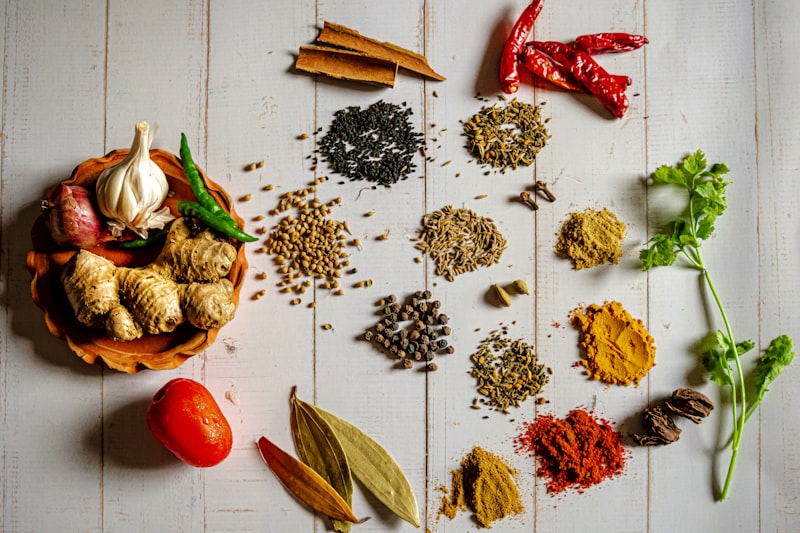
Cumin Seeds Export India 2026: Understanding the World's Most Traded Whole Spice Market
For global spice importers, cumin seeds export from India in 2026 represents one of the most strategically important procurement decisions of the year. India is not merely a major cumin supplier — it is the market. With 70–75% of global cumin production originating from Rajasthan and Gujarat, the Indian price environment at Unjha — the world's single largest cumin trading hub — sets the benchmark for every cumin contract signed in Dubai, Rotterdam, Chicago, or Dhaka.
The rabi cumin crop, sown October–November and harvested March–April, has arrived at market under favorable conditions in 2026. Adequate winter rainfall across Rajasthan's primary cumin belt — covering Jodhpur, Barmer, Jaisalmer, and Pali districts — supported normal acreage and yield, with Rajasthan accounting for approximately 65% of total Indian production and Gujarat's Unjha belt contributing another 30%. The 2026 crop assessment points toward supply volumes in the 300,000–330,000 MT range, restoring normalcy after the weather-stressed 2023–24 season.
India exports 200,000–250,000 MT of cumin annually, generating approximately $650–750 million in FY 2025–26 — a figure that has more than doubled over the past decade, driven by foodservice globalization, the processed food industry's adoption of cumin as a standard flavor component, and growing retail consumer awareness in Western markets. Bangladesh is consistently the largest single volume buyer, absorbing approximately 25–30% of Indian cumin exports in whole seed form. China, UAE, the United States, United Kingdom, Malaysia, and Morocco round out the top tier of buyer markets, each with distinct quality and specification preferences.
The Unjha cumin market (formally the Unjha Agricultural Produce Marketing Committee yard in Gujarat's Mehsana district) processes 40–60% of India's total cumin marketable surplus. Daily arrivals during the peak March–May window run 5,000–15,000 MT, and the daily auction price — quoted in ₹/100kg — functions as the global benchmark equivalent to what Chicago Board of Trade is for corn or the London Metal Exchange is for copper. Every sophisticated international buyer tracks Unjha prices in real time through platforms like AgMarkNet and commodity research services.
What most international procurement teams underestimate is the extent to which Indian cumin bifurcates into two distinct market specifications — European and Asian/Middle Eastern — each with fundamentally different physical and chemical requirements, pricing structures, and preferred buyer applications. Identifying which specification your customer base requires, and sourcing accordingly, determines whether you achieve competitive landed costs or pay a specification premium unnecessarily. This guide provides the complete framework.
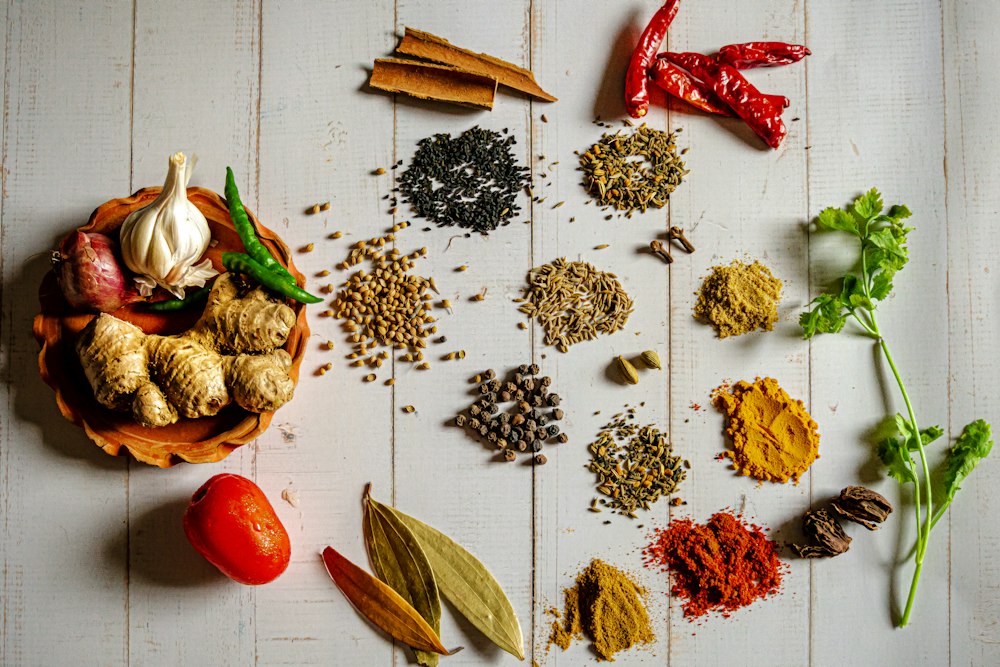
Grades, FOB Prices, and Quality Specifications for 2026 New Crop Cumin
Indian cumin is traded in four primary commercial grades, each differentiated by cleaning process, seed size, moisture, volatile oil content, and foreign matter. Understanding grade distinctions is essential for matching your purchase specification to end-use application and avoiding overpaying for quality parameters that your supply chain does not require.
Singer Grade (Single-Cleaned) is the base commercial grade — mechanically cleaned once, with admixture up to 1.5% and moisture up to 10%. This grade serves bulk industrial applications in curry powder manufacturing, food processing, and flavor extract production where visual presentation is secondary to cost efficiency. FOB price range: $3,200–3,800/MT for 2026 new crop. Packing: 25 kg PP bags or 50 kg jute bags.
Double-Cleaned Grade undergoes a second cleaning pass that reduces admixture to below 1% and foreign matter to below 0.5%. This is the standard specification for most retail and foodservice buyers in Middle Eastern and Asian markets. FOB: $3,500–4,200/MT. Seeds are uniform in color (light greenish-gray to brown), free from webbing and insect damage, with volatile oil content of 2.5–3.5%.
Machine-Cleaned Premium (European Specification) targets EU buyers for retail whole spice packs and premium food ingredients. European specification demands bold seed size (5–6 mm length), lighter greenish color, extraneous matter below 0.3%, moisture below 9%, and pesticide residue compliance with EU MRL Regulation 396/2005. This grade is typically subjected to 3rd-party pesticide panel testing covering 300+ active ingredients before shipment. FOB: $4,000–4,500/MT. Radiance Overseas conducts EU MRL pesticide testing at NABL-accredited labs as standard for European buyers.
Organic Certified Cumin serves the fastest-growing segment — certified organic food manufacturers, premium spice brands, and natural product retailers in the US, EU, and Japan. Supply is limited to farms holding valid NPOP (National Programme for Organic Production) certification for India-to-EU equivalence, or NOP certification for USDA Organic claims. FOB: $4,800–5,500/MT, reflecting organic premium and the documentation overhead of maintaining certification chain of custody from farm to FOB port.
Key quality parameters to include in every purchase contract: moisture ≤10%; volatile oil content (VIS) ≥2.5% by steam distillation; total admixture ≤1% (EU spec ≤0.5%); extraneous matter ≤0.5%; aflatoxin B1 ≤2 ppb (EU); heavy metals within EU Regulation 1881/2006 limits; salmonella negative in 25g; sulfur dioxide not detected (EU prohibits treatment). Shipment from Mundra or Nhava Sheva port; transit time to Rotterdam 20–22 days; to Baltimore 25–28 days.
The April–May window is optimal for new crop cumin procurement. The 2026 rabi cumin harvest arrived in Unjha market from late March, with peak arrivals and competitive pricing through May. Buyers who contract now secure new-crop quality and current pricing before Q3 seasonal tightening, when pre-monsoon demand from Middle Eastern and EU importers restocks ahead of the Ramadan and year-end consumption cycles. Standard lead time from order confirmation to shipment: 10–15 working days for regular grades; 20–25 days for organic with full documentation.
EU MRL Compliance, Pesticide Risk, and Market Outlook for Cumin Buyers
For European importers of Indian cumin, pesticide Maximum Residue Level (MRL) compliance under EU Regulation 396/2005 is the single highest-stakes quality risk in the supply chain. The EU's analytical surveillance of imported spices has intensified through the RASFF (Rapid Alert System for Food and Feed) network — cumin is among the most frequently flagged commodities for pesticide exceedances, driven by smallholder farmers' use of non-EU-approved active ingredients.
Common problematic actives in Indian cumin include: Chlorpyrifos (EU MRL: 0.01 mg/kg default under Regulation 2020/1085); Profenofos; Triazophos; and Acephate. Buyers must require pre-shipment pesticide panel testing covering minimum 250 active ingredients from an accredited laboratory (FSSAI-approved or NABL-accredited, with results on ELISA and GC/MS/MS platforms). Radiance Overseas conducts standard 350-compound pesticide panels on all European-specification cumin before shipment, with full CoA and phytosanitary certificate provided.
The adulteration risk in cumin deserves mention. European food safety authorities have previously detected ground cumin mislabeled as whole cumin containing undeclared peanut allergen material — a food safety issue unrelated to pesticides. Whole cumin specification, visually inspected and photographed at loading, combined with NIR (near-infrared) spectroscopy screening at destination, remains best practice for European retail buyers.
Looking at the 2026 market outlook: Rajasthan production is projected at 220,000–240,000 MT, with Gujarat contributing 75,000–90,000 MT — total Indian crop likely 300,000–330,000 MT, approximately 8–12% above the 2024–25 depressed level. This supply normalization is expected to sustain price stability in the $3,200–4,200/MT range for standard commercial grades through Q2–Q3 2026, before the usual September–October tightening as new-crop inventory depletes ahead of the following rabi season.
Bangladesh's demand — approximately 55,000–65,000 MT annually — is price-sensitive and primarily absorbs Singer grade material. The UAE re-export model channels significant volumes into Gulf Cooperation Council markets and onward to East Africa. US and UK buyers are increasingly moving toward organic-certified and EU-compliant specifications, creating a quality tiering that rewards exporters with robust testing infrastructure over commodity traders without it. Radiance Overseas's investment in pre-shipment testing protocols positions it as the preferred partner for compliance-focused buyers in regulated markets.
Frequently Asked Questions
What is the FOB price of cumin seeds from India in 2026?
2026 new crop cumin FOB prices at Mundra/Nhava Sheva: Singer grade $3,200–3,800/MT; Double-cleaned $3,500–4,200/MT; Machine-cleaned European specification $4,000–4,500/MT; USDA/EU Organic certified $4,800–5,500/MT. Prices are benchmarked against Unjha APMC daily auction rates. Organic-certified supply commands a 20–30% premium reflecting limited certified acreage and documentation overhead.
What is the difference between European and Asian specification cumin from India?
European specification cumin requires bold seed size (5–6 mm), lighter greenish color, low extraneous matter (<0.3%), and EU MRL 396/2005 pesticide compliance with 250+ compound testing. Asian and Middle Eastern specification accepts smaller, darker, more pungent seeds (higher volatile oil 2.5–3.5%), with standard double-cleaning and less rigorous pesticide panel requirements. European spec commands a $500–1,000/MT premium over standard double-cleaned grade.
What pesticide tests are required for cumin exports to the European Union?
EU Regulation 396/2005 sets MRLs for 500+ pesticide actives. Indian cumin commonly tested for: Chlorpyrifos (MRL 0.01 mg/kg), Profenofos, Triazophos, Acephate, Dimethoate, and Carbendazim. Pre-shipment testing should cover minimum 250 active ingredients via GC/MS/MS and LC/MS/MS platforms from a NABL-accredited laboratory. RASFF border rejection data shows pesticides are the most common cause of Indian spice rejections at EU ports.
When is the best time to buy Indian cumin? What is the 2026 harvest season?
The rabi cumin crop is harvested March–April in India. New crop arrives at Unjha market from late March through May. The optimal procurement window for 2026 is April–May — new-crop quality, competitive pricing before seasonal tightening. Q3 (July–September) prices typically rise 10–18% as inventory depletes ahead of the next rabi planting season. Buyers requiring organic certification should note that certified volumes exhaust quickly and must be contracted in April–May.
What is Unjha market and why does it matter for cumin buyers?
Unjha APMC (Agricultural Produce Marketing Committee) in Gujarat's Mehsana district is the world's largest cumin spot trading market, processing 40–60% of India's entire cumin marketable surplus. Daily arrivals during peak season run 5,000–15,000 MT. Unjha auction prices — quoted in ₹/100 kg — serve as the global benchmark for all cumin contracts. International buyers who track Unjha prices (available via AgMarkNet.nic.in and commodity research platforms) have a real-time indicator of the Indian supply-demand balance and can time procurement decisions accordingly.